


Leave Your Message

44dgadgyl8

7 Air Breaker Circuit Breaker Buying Tips

Choosing an Air Breaker Circuit Breaker is not simply a matter of selecting the largest rating or lowest price. The device must suit the system voltage, expected load, available fault current, and operating environment. A mismatch can affect protection, installation, or maintenance. Real-world fit matters. Check the panel’s dimensions, busbar arrangement, cable access, and available clearance before comparing models. Small details matter. A crowded switchboard can make routine inspection harder, even when the breaker’s specifications look suitable on paper.

This guide introduces seven practical buying considerations, from rated current and breaking capacity to trip-unit functions, accessories, service support, and documentation. It also explains what to verify with the manufacturer or supplier, rather than relying on a short product listing. Ask for technical data that matches the actual application, including installation conditions and compatible accessories. Review it carefully. Ratings and features vary by model, and selection should be checked against the system design by a qualified electrical professional. No brochure can replace that review. For projects with unusual loads, limited space, or demanding operating conditions, confirm assumptions before placing an order. That pause can prevent costly surprises. Some purchasing decisions still involve trade-offs; a lower initial cost may not mean easier servicing or a better fit over time. Use these tips as a clear starting point, then verify every critical detail with current manufacturer documentation.

7 Air Breaker Circuit Breaker Buying Tips

Establish System Voltage, Frequency, and Rated Current (ACBs Reach 6,300 A)

An air circuit breaker should match the electrical system it will protect, not just the equipment nameplate. Confirm the nominal voltage, frequency, and number of phases from the site drawings, then compare them with the breaker’s ratings. A mismatch can affect operation and insulation requirements. Check the actual supply, too; drawings may be outdated.

Rated current needs equal care. Estimate the expected load from measured or documented demand, then account for ambient temperature, enclosure conditions, and likely expansion. Air circuit breakers are available in ratings up to 6,300 A, but that does not mean a 6,300 A unit suits every installation. Oversizing can weaken practical protection, while undersizing may cause unwanted trips. The details matter.

Tips: Verify voltage and frequency on the equipment label and supply documents. Compare continuous load with the breaker’s rated current, including any derating specified for its installation. Ask a qualified electrical professional to check the selection against the system’s fault level and protection settings. It is easy to overlook heat inside a crowded switchboard; that small detail can change the answer. Don’t guess.

Compare Icu and Ics Breaking Capacities Under IEC 60947-2

When comparing air circuit breakers, Icu and Ics answer different questions. Icu is the ultimate short-circuit breaking capacity: the maximum prospective fault current the breaker can interrupt under specified test conditions. Ics is the service breaking capacity, indicating a tested level at which the breaker is intended to remain usable afterward. Under IEC 60947-2, Ics is commonly stated as a percentage of Icu, but the ratio varies by breaker and rating. Check the actual product data.

Start with the prospective short-circuit current at the installation point, not just the panel’s general rating. Compare it with the breaker’s capacity at the system voltage and configuration you will use. A breaker with adequate Icu may still have a lower Ics than your operating needs require. After a severe fault, continued service matters. That distinction is easy to overlook. I once focused too much on the largest number; it was not enough.

Tips: Match both ratings to the available fault current, and favor an Ics suitable for the site’s continuity needs. Verify voltage, pole arrangement, and coordination with upstream protection. Read the IEC 60947-2 test data for the exact model and rating. If the application is critical, ask a qualified engineer to review the selection. There is no universal best ratio.

Check Pole Count, Mounting Style, and Short-Time Rating Icw

When selecting an air circuit breaker, start with the pole count. A three-pole unit suits many three-phase systems, while a four-pole design also switches the neutral. The right choice depends on the grounding arrangement and whether the neutral must be isolated. Check the one-line diagram and system specifications; counting conductors alone can mislead. A small oversight.

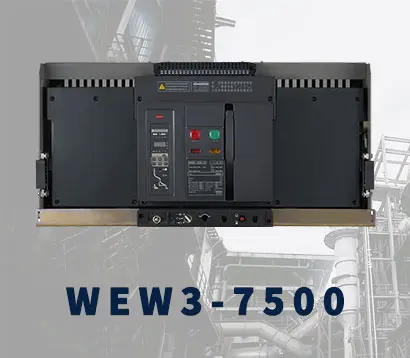
Mounting style matters just as much. Fixed breakers bolt into place, while drawout models slide into a cradle for inspection or replacement. Confirm the panel cutout, bus connections, terminal orientation, and required clearances. Picture the actual cabinet: door swing, cable bend radius, and room for racking tools can affect access. A dimensional drawing is more useful than a product photo. Even careful checks can miss site-specific obstructions, so verify dimensions on the approved panel layout.

Review the short-time withstand rating, Icw, against the system’s prospective fault current and the intended protection delay. Icw indicates the current a breaker can carry for a stated time without damage; it is not the same as its interrupting rating. If selective coordination requires a delay, confirm the breaker’s Icw value at the relevant voltage and duration. Compare it with the protection study and the manufacturer’s technical data. Do not assume every air breaker offers the same short-time capability. The coordination plan may need a second look.

7 Air Breaker Circuit Breaker Buying Tips - Check Pole Count, Mounting Style, and Short-Time Rating Icw

# What to Check Selection Guidance What to Confirm Before Ordering
1 Pole count Match the breaker to the system conductors and switching requirements. Three-pole units are commonly used on three-phase circuits; four-pole units can also switch the neutral when the system design requires it. Confirm the number of phases, neutral arrangement, earthing system, and whether the neutral must be switched or protected.
2 Mounting style Fixed breakers are installed in a fixed position. Draw-out breakers can be moved between connected, test, and disconnected positions, which can support inspection and maintenance procedures. Check switchboard compatibility, available compartment dimensions, busbar connections, and the required position interlocks.
3 Short-time withstand rating (Icw) Icw is the rated short-time current a breaker can withstand for a specified duration under stated conditions. It matters when selective coordination requires a downstream fault to be cleared before the upstream breaker trips. Compare the breaker’s Icw value and stated duration, such as 1 second, with the calculated short-circuit current and protection-coordination study. Do not treat Icw as the breaking capacity.
4 Breaking capacity (Icu and Ics) Icu is the rated ultimate short-circuit breaking capacity; Ics is the rated service short-circuit breaking capacity. The required values depend on the prospective fault current at the installation point and the project specification. Verify the applicable IEC 60947-2 ratings and ensure the selected values are suitable for the calculated fault level at the breaker terminals.
5 Rated current and trip settings Select a frame and trip unit that suit the protected circuit. The breaker’s rating and adjustable long-time, short-time, and instantaneous settings must coordinate with the load, conductors, and upstream and downstream protection. Check the load calculation, conductor ampacity, ambient and enclosure conditions, and the approved protection settings.
6 Voltage and system frequency Confirm that the breaker’s rated operational voltage and frequency are appropriate for the electrical system. Ratings and performance can vary with the specified operating conditions. Match the nameplate ratings to the system voltage, frequency, insulation requirements, and installation drawings.
7 Operating mechanism and accessories Choose manual or electrically operated operation as required. Shunt trips, undervoltage releases, auxiliary contacts, and communication or monitoring accessories should be selected only when the control scheme needs them. Confirm control voltage, accessory compatibility, wiring diagrams, interlocking requirements, and the maintenance and testing procedure.

Choose Trip-Unit Functions and Settings for Selective Coordination

7 Air Breaker Circuit Breaker Buying Tips

Choose Trip-Unit Functions and Settings for Selective Coordination

Selective coordination helps keep a fault from shutting down more equipment than necessary. Compare the upstream air breaker’s trip curve with downstream protective devices under expected fault conditions. A trip unit may offer long-time, short-time, instantaneous, and ground-fault functions. Choose only functions that suit the system design and applicable equipment limits. Small changes matter. A short-time delay can improve coordination, but excessive delay may expose conductors and equipment to damaging energy.

Tips: Request time-current curves and a coordination review before purchase. Confirm that the trip unit provides the needed adjustment ranges, measurement accuracy, and event records. Check both normal and backup operating conditions. Do not copy settings from a similar installation; available fault current and device combinations can differ.

It is tempting to focus on the breaker’s current rating and overlook the trip unit. That can leave too little adjustment flexibility for selective coordination. Review pickup and delay settings against downstream devices, conductor limits, and the breaker’s interrupting capability. Verify proposed settings with a qualified electrical professional and test the completed system as required. Curves need careful reading. A setting that looks selective on paper may behave differently when real device tolerances are considered.

Verify Standards, Accessories, and Maintenance Requirements Before Buying

Before buying an air circuit breaker, confirm which standard and edition apply to your installation. Check the nameplate data against the system voltage, continuous current, and available fault current. A reference to a standard is useful, but request the relevant test documentation and verify that the breaker’s ratings match the actual application. Details matter.

Accessories need the same scrutiny. List the required shunt trip, undervoltage release, auxiliary contacts, motor operator, and drawout interlocks, then confirm they are compatible with the exact breaker configuration. A small mismatch can delay commissioning. It is easy to focus on the breaker frame and overlook control voltage or wiring terminals; that deserves a second look.

Maintenance requirements should be clear before purchase. Ask how inspection, contact wear checks, trip testing, and lubrication are handled, and whether special tools or trained service personnel are needed. Confirm that replacement parts and technical documents will remain available. Compare the required maintenance space with the actual switchboard layout, including room to rack out a drawout unit safely. A neat brochure cannot answer every site question, so have a qualified electrical professional review the selection and the maintenance plan.